
How Does Your Own Biases Affect How You Interpret Information?
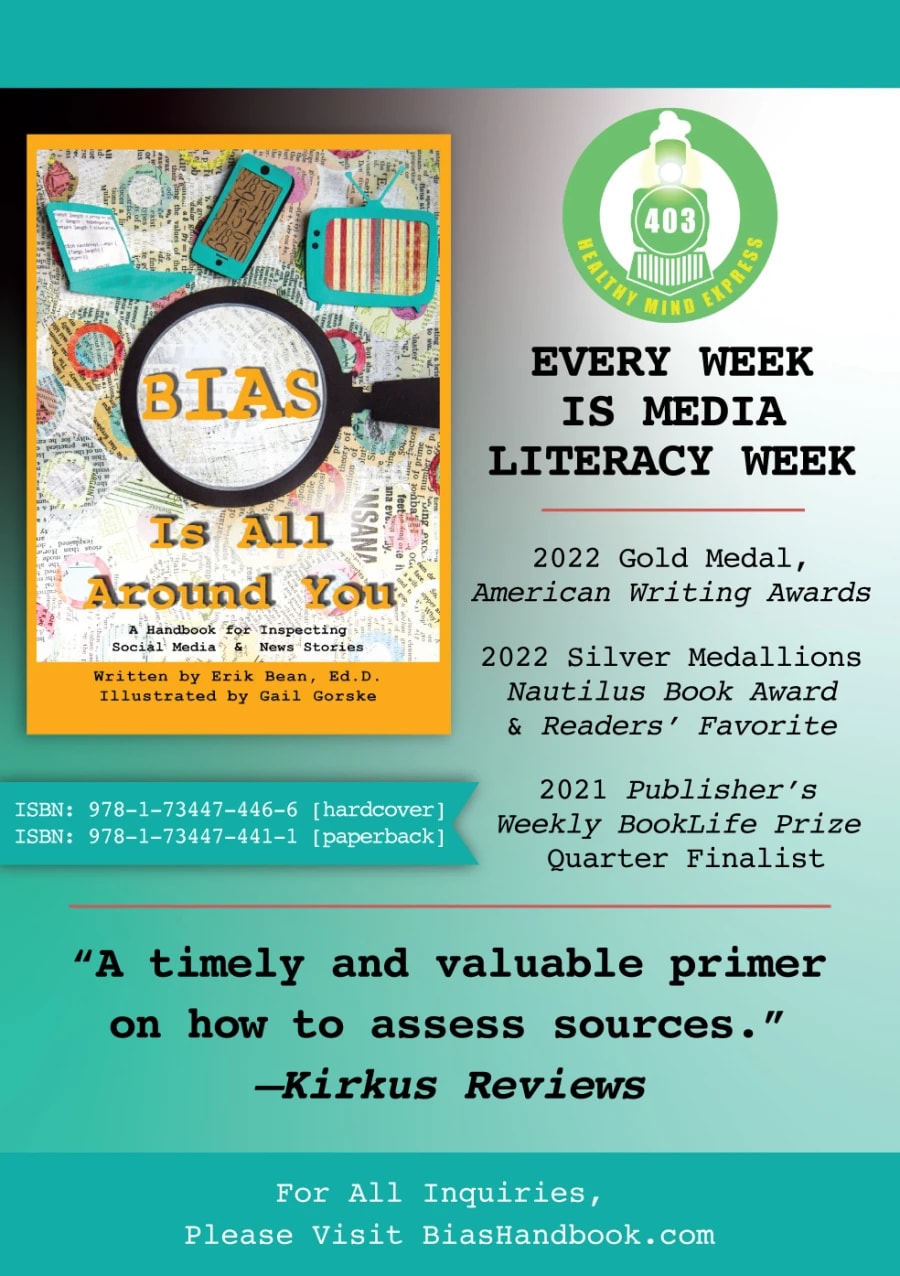
The following 7 questions are designed to accompany the book, Bias Is All Around You: A Handbook for Inspecting Social Media & News Stories, For definitions on your specific personal biases visit https://biashandbook.com/tools
We all have biases. How do your biases affect the way you interpret information in social media and news stories?
🔎 Before You Begin: How to Use This 7-Question Inner Circle Bias Survey
This short survey is designed to help you reflect on how your personal tendencies may influence the way you interpret information in news stories and social media.
This is not a psychometric instrument. It is a structured self-reflection tool designed to accompany Bias Is All Around You. This exercise bridges personal cognition with media literacy practice. Before evaluating the bias of institutions, we must first examine the bias within ourselves.
What to Expect
• The survey takes about 2 minutes.
• Your results are confidential.
• At the end, you will see percentage comparisons from others who have taken the survey over the past five years.
These comparisons are descriptive, not prescriptive. They show trends among participants, not a standard you are expected to meet.
Important: Take a screenshot of your results. Because the survey is connected to Facebook, you may only be able to complete it once.
Get Started: Interpret & Use Your Results
Follow these 5 steps:
1. Screenshot Your Results
Save your comparison percentages so you can reflect on them.
2. Identify Your Strongest Tendencies
Look at your answers and ask:
Did you rely heavily on your inner circle?
Do you hesitate to disagree with others?
Do you research sources regularly?
Do you tend to see issues as right vs. wrong?
Notice patterns, not perfection.
3. Visit the Tools Page
Go to:
https://biashandbook.com/tools
Compare your responses to the five cognitive bias definitions listed there:
• Confirmation Bias
• Anchoring
• Affinity Bias
• Conformity Bias
• Halo Effect
Ask yourself:
Which one best describes my habits?
Most people identify with one primary tendency, though more than one may apply.
4. Connect Bias to Behavior
Now apply your result.
Might you scored indicate:
• Heavy reliance on your inner circle → You may exhibit Affinity Bias
• Reluctance to disagree with your group → You may exhibit Conformity Bias
• Viewing issues as strictly right or wrong → You may exhibit Confirmation Bias
• Trusting the first interpretation you encounter → You may exhibit Anchoring
• Trusting voices primarily because of credentials or status → You may exhibit the Halo Effect
5. Apply This Insight in Real Time
Next time you read a story or scroll social media, pause and ask:
• Am I accepting this because it confirms what I already believe?
• Am I trusting this because it came from someone I like?
• Am I ignoring opposing views to avoid conflict?
• Am I reacting emotionally instead of examining facts?
That pause is where media literacy begins.
Why This Survey Matters
- Understanding your personal bias does not mean you are wrong.
It means you are self-aware. Self-awareness precedes objective analysis. - Bias becomes harmful only when it goes unexamined.
- The goal of this tool is not to eliminate bias. The goal is to help you become more confident, deliberate, and objective before accepting or sharing information.
In a world flooded with conflicting narratives, objective self-leadership begins with disciplined inspection of information.
This survey reflects an emerging concept we call Leaderacy, the integration of leadership and literacy. Leaderacy begins with the premise that effective leadership is not possible without disciplined inspection of information. Before individuals can lead others responsibly, they must first examine how their own cognitive tendencies shape what they accept as true. This inner work of self-leadership forms the foundation of objective decision-making in a media-saturated world.